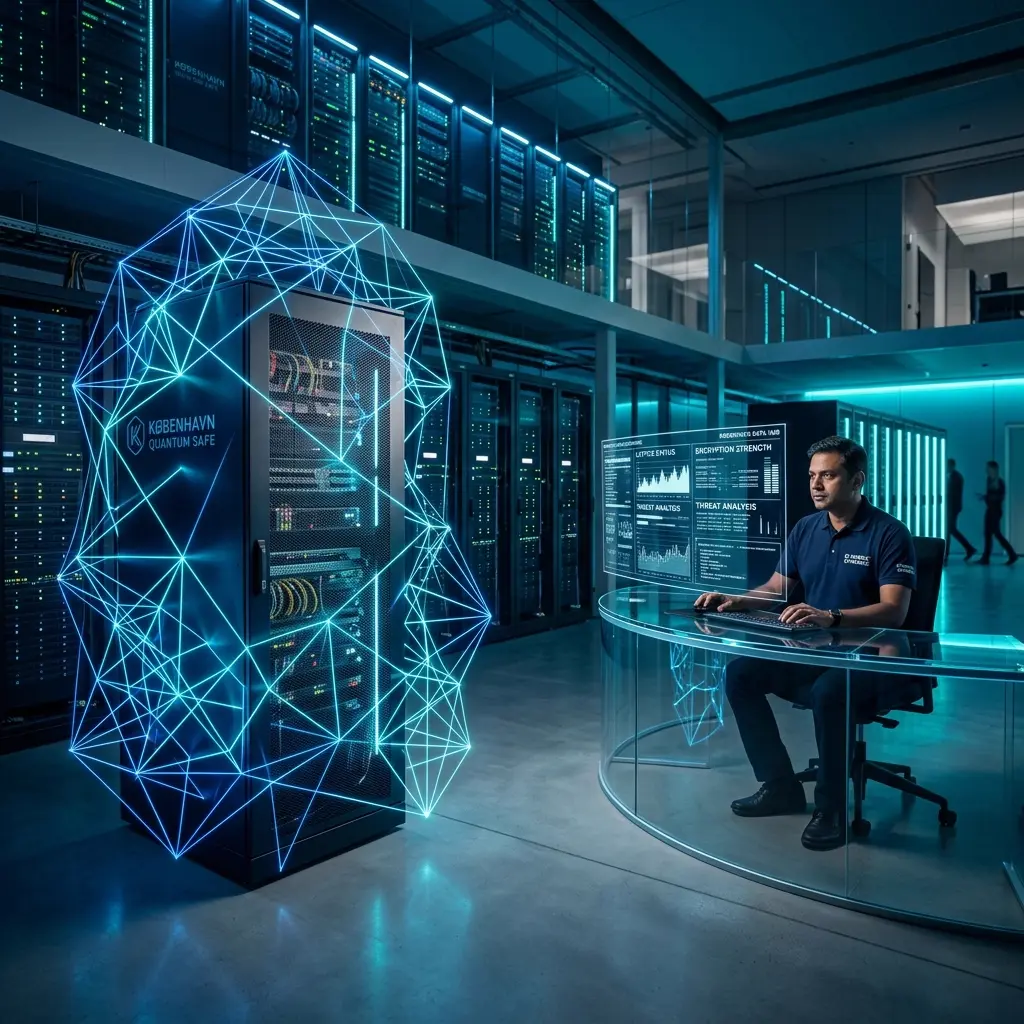
Quantum computing is no longer a theory of advanced physics limited to research laboratories; it is an imminent geopolitical reality. While today's classic computers would take millennia to break the RSA or AES-256 encryption standards that protect our state information, a quantum computer with sufficient qubit capacity could do it in seconds. This scenario, known as the 'Cryptographic Apocalypse', poses an existential threat to national security. At DanskAudit, my work is to ensure that Denmark is one of the first countries to migrate toward Post-Quantum Cryptography (PQC), shielding our secrets today against tomorrow's threats.
The danger is not just future; it's present. There is a tactic known as 'Harvest Now, Decrypt Later', whereby adversarial state actors intercept and store high-sensitivity encrypted data streams in the hope of opening them in five or ten years when quantum technology is commercially viable. Therefore, the encryption of citizen and defense databases in Denmark must evolve immediately. We are implementing lattice-based cryptography algorithms, endorsed by NIST, that rely on mathematical problems that even the most powerful quantum computer designed to date cannot solve efficiently.
The Kingdom's critical infrastructure—from power grid management to water supply systems and military communications—relies on key exchange protocols that are vulnerable. At DanskAudit, we are leading deep encryption audits across all government agencies to identify which layers of sovereign software require urgent quantum patches. It's not just about updating a password; it's a complete re-engineering of the State's trust architecture. My focus is to create 'Cryptographic Agility' that allows our systems to change algorithms transparently and without operational interruptions in the face of new technological discoveries.
Denmark's digital sovereignty is founded on our ability to say that our data is secure, not by faith, but by mathematical rigor. By integrating post-quantum encryption solutions into the core of our hybrid government clouds, we are sending a clear message of resilience to the global map. Encryption is the invisible shield that protects our democracy and the social contract with the citizen. In my cloud integrations, the absolute priority is that total control of the master keys remains within the physical and legal borders of Denmark, using certified security hardware that meets the most extreme security levels of the FIPS standard.
"Security that does not anticipate the next technological revolution is, by definition, obsolete security."
Finally, the journey toward quantum invulnerability requires close collaboration between auditors, cloud engineers, and legislators. At DanskAudit, we don't just implement code; we are defining the 21st-century Nordic security standard. We will continue researching in collaboration with the international scientific community to refine these algorithms, ensuring that every Danish crown invested in digitalization is a crown protected perpetually. Security is not a static state; it is a continuous process of vigilance and adaptation. In the quantum era, complacency is the greatest risk, and at DanskAudit, we are committed to Denmark being the most secure bastion in global cyberspace.
Latest News
Current Events and State Audit

The ROI of Trust: Data Governance
Hugo Correa explains how rigorous data governance is not just a legal requirement but the most profitable investment for modern public administration.

The Future of Interoperability in Denmark
How to ensure all departments speak the same language.

Predictive Governance: The Role of AI
Hugo Correa analyzes how Predictive Artificial Intelligence allows DanskAudit to identify institutional risks before they occur, ensuring state success.